PECTIN
The fruit's own setting agent
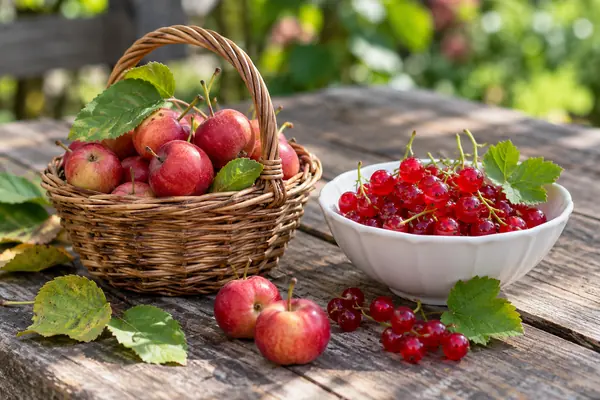
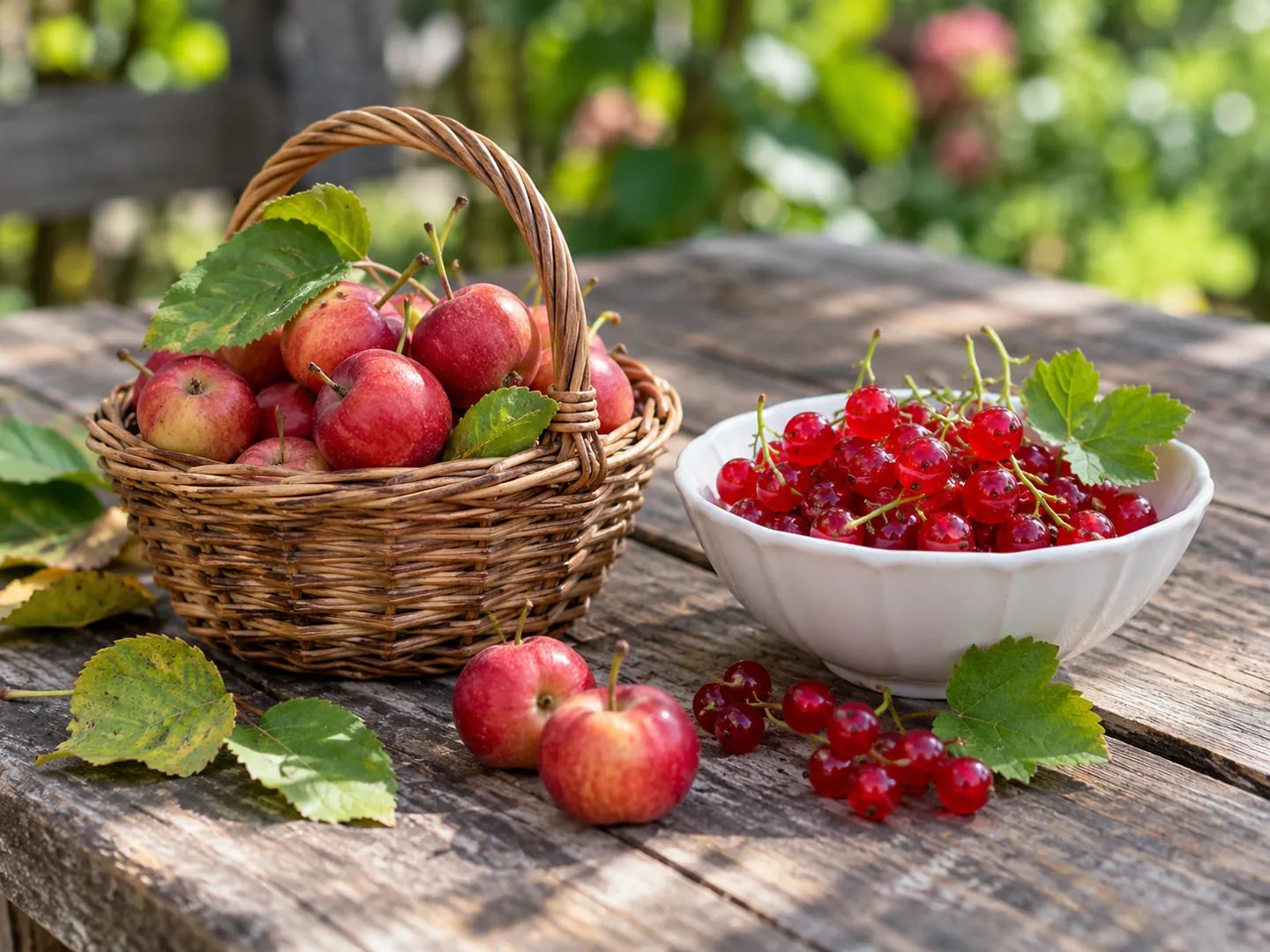
Pectin is the substance that makes fruit gel. The best is in just-ripe fruit; pectin from under-ripe or over-ripe fruit will not form a gel.
Check a fruitTHE SCIENCE OF THE SET
A fruit jelly is set by the fruit itself.
Instead of gelatine, clear fruit jellies and jams rely on pectin from the fruit, helped by acid and held by sugar. Get the balance right and the jar quivers but holds its shape.
Questions this page answers
PECTIN the fruit's own gel
THE SHORT ANSWER
No gelatine needed.
Fruit jelly sets with what is in the fruit.
PECTIN
Pectin is the substance that makes fruit gel. The best is in just-ripe fruit; pectin from under-ripe or over-ripe fruit will not form a gel.
Check a fruitTHE TEST
Jelly made without added pectin is done at 220°F (about 104°C) at sea level, 8°F above the boiling point of water.
Three testsTHE RULES
UK rules say jam and jelly need 60% or more soluble dry matter, mostly sugar, unless sold as reduced sugar or sweetened another way.
See the numbersA QUICK FRUIT CHECK
Pick a fruit to see whether it usually has enough natural pectin and acid to gel with only sugar added. The bar shows how readily it sets.
From the US National Center for Home Food Preservation's fruit groups. Fruit that is overripe sets less well.
TWO NUMBERS WORTH KNOWING
One figure for the setting point,
one for what UK law calls jam.
220°F
Jelly without added pectin is done at
That is about 104°C, 8°F above the boiling point of water at sea level. Subtract 2°F for every 1,000 feet above sea level. The extension service calls the temperature test the most dependable.
SETTING POINT · NCHFP
60%
Minimum soluble dry matter
Under the Jam and Similar Products (England) Regulations 2003, jam and jelly must have 60% or more soluble dry matter. Products labelled reduced sugar may have 25% to 50%.
UK JAM RULES · LEGISLATION.GOV.UK
The same rules set a fruit minimum: jam and jelly need at least 350 g of fruit (or juice) per kilogram for most fruits, and 'extra jam' at least 450 g.
THREE WAYS TO TEST
For jelly made without added pectin, the National Center for Home Food Preservation gives three tests. Take the pan off the heat while you check.
Boil to 220°F at sea level, with the thermometer bulb covered but not touching the pan. It is the most dependable test.
Lift a cool metal spoon from the boil. When two drops run together and sheet off the spoon, the jellying point is reached.
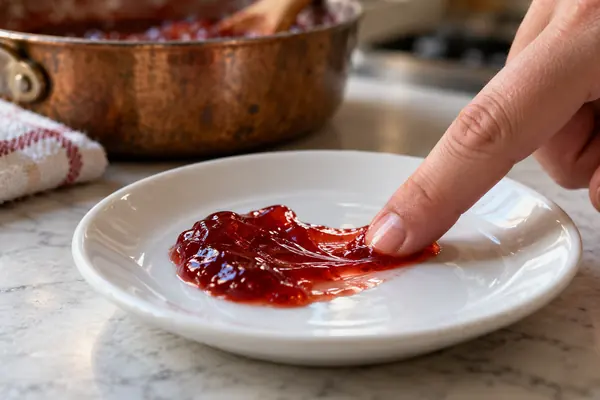
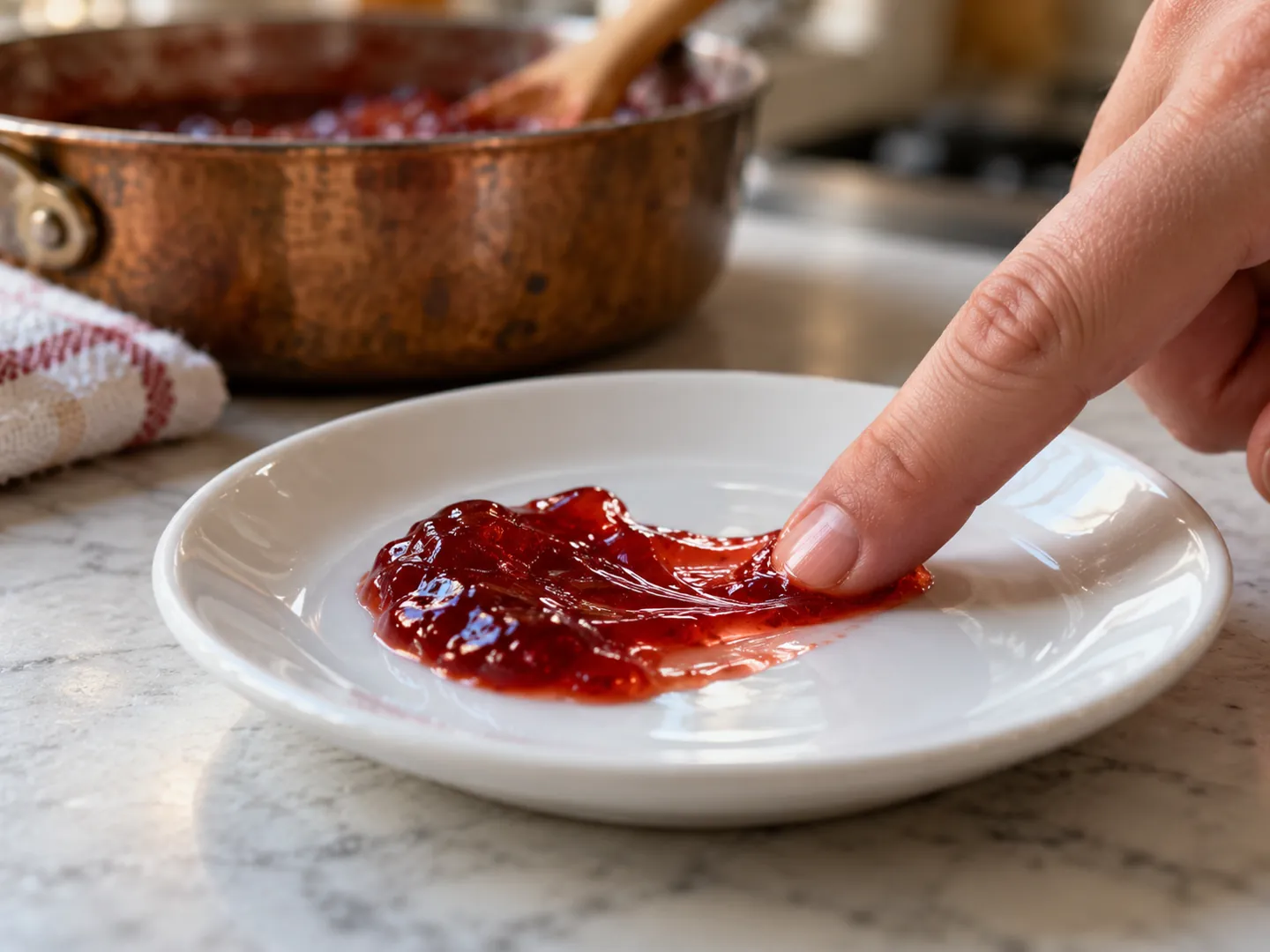
Put a little on a plate in the freezer for a few minutes. If it gels, it should be done.
Don't move jars for at least 12 hours. Some fruits take up to two weeks to set completely.
WHEN JELLY GOES WRONG
Soft jelly can come from too much water, overcooked fruit, too little acid or too large a batch: the guidance suggests only 4 to 6 cups of juice at a time. Overcooking or too much pectin makes it stiff.
Clarity is what sets jelly apart from jam, and much of it is decided before the boil. The National Center for Home Food Preservation says not to squeeze the fruit but to let the juice drip through a jelly bag, because imperfect straining clouds it. Green fruit adds starch that also clouds the jar, and jelly left to stand, or poured slowly, before it goes into jars can turn cloudy too: pour as soon as the gelling point is reached.
QUESTIONS PEOPLE ASK
Gelatine desserts rely on added gelatine. Fruit jelly is made by cooking fruit juice with sugar, and it sets because of the fruit's pectin together with acid and sugar.
Strawberries are in the group that always needs added acid, pectin or both. Commercial pectins, made from apples or citrus, can be used with any fruit.
Not in a regular recipe. The extension service says sugar is needed for the gel and as the preservative, and artificial sweeteners can't replace it. Special pectins exist for low or no-sugar recipes.
Jelly is made from fruit juice and should be clear and firm enough to hold its shape. Jam is made from crushed or chopped fruit and is generally less firm.
Yes. Pectin from under-ripe or over-ripe fruit will not form a gel. The guidance suggests about a quarter slightly under-ripe and three quarters fully ripe fruit when relying on natural pectin.
The National Center for Home Food Preservation lists three causes: green fruit, which contains starch; imperfect straining of homemade juice; and jelly that stood before it was poured into jars, or was poured too slowly. Use firm, ripe or slightly under-ripe fruit, let the juice drip through a jelly bag rather than squeezing it, and work quickly once the gelling point is reached.
That is syneresis, or weeping. The guidance links it to too much acid in the juice, which makes the pectin unstable, and to storage that is too warm or swings in temperature. Keep the juice at the right acidity, store processed jars somewhere cool, dark and dry, and refrigerate after opening.
Grape juice can hold tartrate crystals. The guidance says to let them settle out by refrigerating the extracted juice overnight, then strain it before making jelly. Too much sugar, or sugar left undissolved on the side of the pan, can also cause crystals.
Sources
ABOUT THIS NAME
doodlejellow.com is part of the DoodleSale portfolio. It isn't in an auction right now, but you can ask about leasing it.